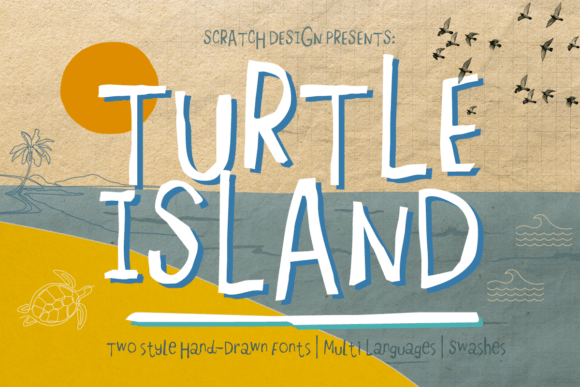
Turtle Island Font: Raw Typography With Soul
There's something magnetic about a typeface that looks like it was inked by hand rather than generated by a machine. Turtle Island is exactly that kind of font—a hand-drawn typeface that brings raw, authentic energy to every design it touches. Whether you're working on a music poster, a film flyer, or a branding project that needs real character, this font delivers personality without trying too hard.
What Makes Turtle Island Different From Standard Display Fonts
Most display fonts lean heavily into polish. Turtle Island goes the other direction. Its naïve, expressive shapes capture the true essence of hand-drawn lettering, born directly from the designer's ink strokes. No filter, no compromise—just pure typographic personality. This handwritten font carries a vintage-inspired charm that feels both modern and timeless at the same time.
What sets it apart is the attention to detail in every stroke. The natural ink variations and slight imperfections give it a lived-in quality that polished sans serif or serif fonts simply can't replicate. It's the kind of typeface that makes people pause and look twice.
Two Unique Styles Built for Creative Flexibility
Turtle Island comes in two distinct styles that pair beautifully together. This dual-style approach gives you serious flexibility when building layouts. You can mix and match to create visual hierarchy, or stick with one style for a cleaner, more uniform look.
For example, use the bolder style for headlines and the lighter one for supporting text. Or combine them on a single poster to add depth and movement. This kind of font pairing is what separates amateur designs from ones that actually feel intentional. It's one of those creative fonts that rewards experimentation.
Where Turtle Island Shines in Real Projects
This isn't a font you'll use for everything—but when it fits, it fits perfectly. Here are the projects where Turtle Island truly comes alive:
Social media graphics: Eye-catching visuals that stop the scroll in a feed full of generic templates
It also works well in editorial design, web design, and even presentation decks when you want to break away from the corporate look. Anywhere you need a creative font that feels human, Turtle Island earns its place.
Tips for Using Turtle Island Effectively
Because this is a handwritten font with strong personality, readability matters. Use it at larger sizes for headlines and display text. At small sizes, the ink strokes can blend together, so pair it with a clean sans serif or serif font for body copy. This keeps your design balanced while letting Turtle Island do what it does best—command attention.
When it comes to font pairing, less is more. Let Turtle Island be the star. A simple neutral typeface in the background lets its character shine without competing for attention. Think of it as the lead guitar in your typographic band.
Why Typography Choices Shape How People See Your Brand
The fonts you choose say a lot before anyone reads a single word. A premium font like Turtle Island signals creativity, authenticity, and attention to detail. It tells your audience that you care about how things look, not just what they say. For commercial projects, this matters—especially when you're building a brand identity that needs to feel memorable.
Before you download any font, ask yourself if it matches the tone of your project. Turtle Island isn't for every job, but for free-spirited, artistic, or vintage-inspired work, it's one of the most expressive options out there. If you're designing something that needs heart and handcrafted energy, this typeface was made for that exact moment.
Great design always comes down to the details, and typography is one of the most powerful details you can get right. Turtle Island gives you a bold, genuine, and beautifully imperfect typeface that can elevate everything from a single poster to an entire brand system. If your next project needs real character, this font deserves a spot in your design assets.